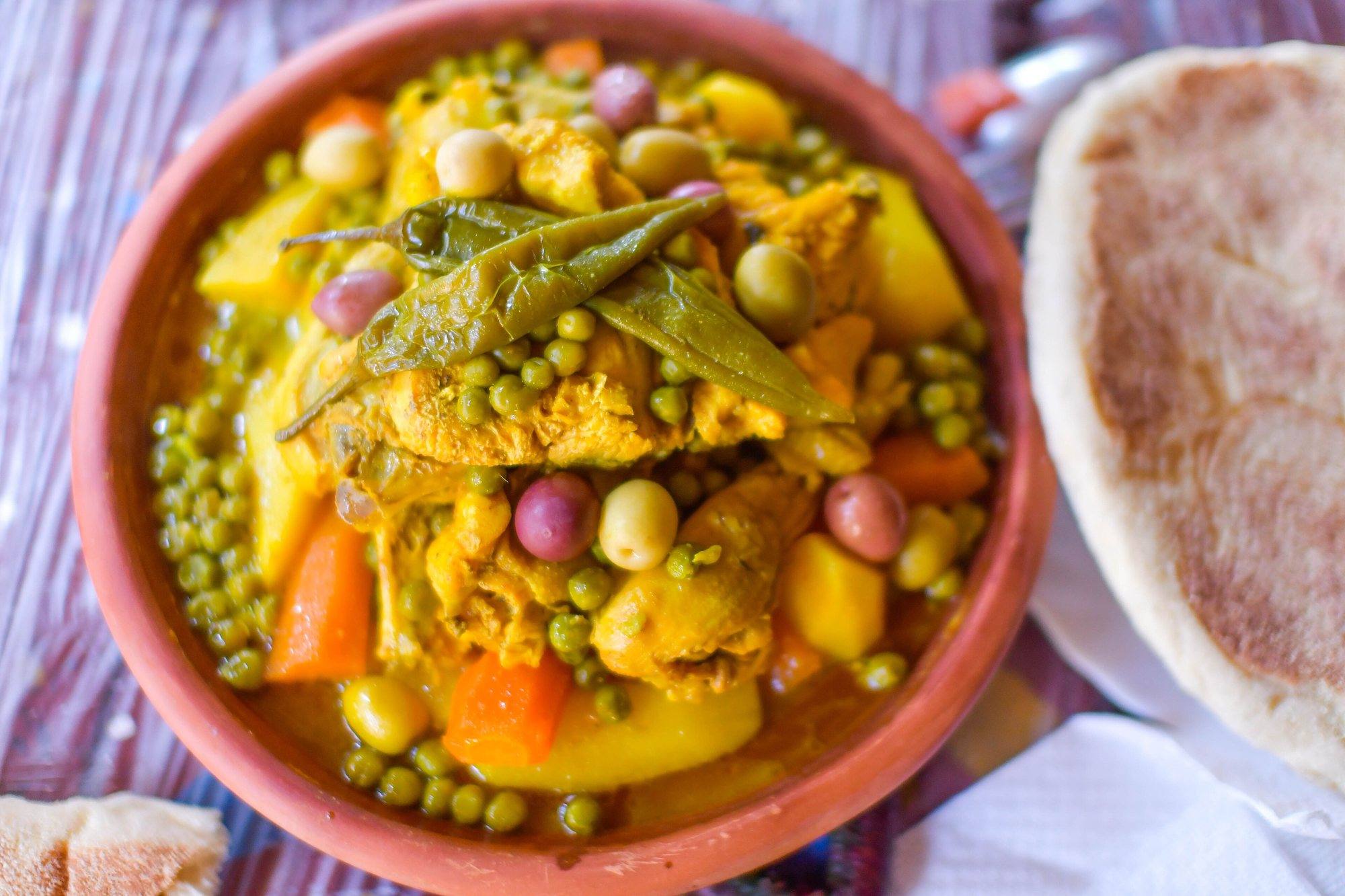
3 to 4 hours
Tagine Cooking Class
Master Morocco’s signature slow-cooked dish: layering meat or vegetables, spices and aromatics in a clay tagine and letting time do the rest.
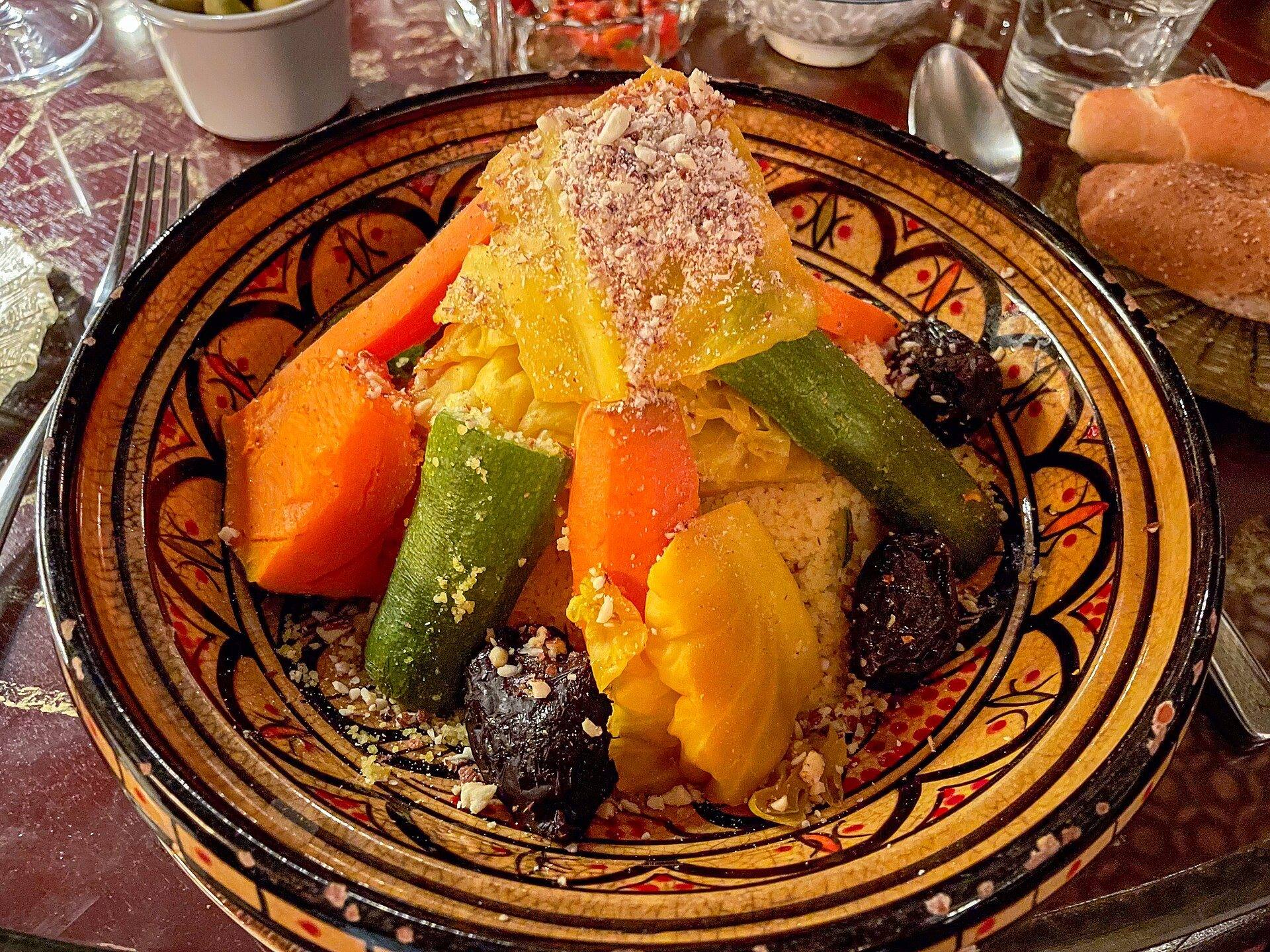
Moroccan culinary experience
Learn the patient, hands-on craft behind Morocco’s Friday dish, from steaming the grain to building the broth.
About this experience
Couscous is one of the defining dishes of North Africa, and in many Moroccan homes it is still the centre of the Friday family lunch. Good couscous is light and separate, never sticky, and that texture comes from technique: the grain is moistened, worked by hand and steamed several times over a simmering broth.
A couscous workshop slows down and focuses on this process. Depending on the host, you may learn to roll couscous from semolina, or work with dried couscous and learn to steam it properly in a couscoussier, the two-tiered pot used across Morocco.
The experience
Every host has their own style, but most experiences follow a similar rhythm.
Moisten, oil and rub the couscous between your palms in a wide dish, a gesture Moroccan cooks learn as children.
Learn how many times to steam, when to add water and salt, and how to tell when the grain is ready.
Cook meat or chickpeas with seasonal vegetables such as squash, turnips, carrots and courgettes.
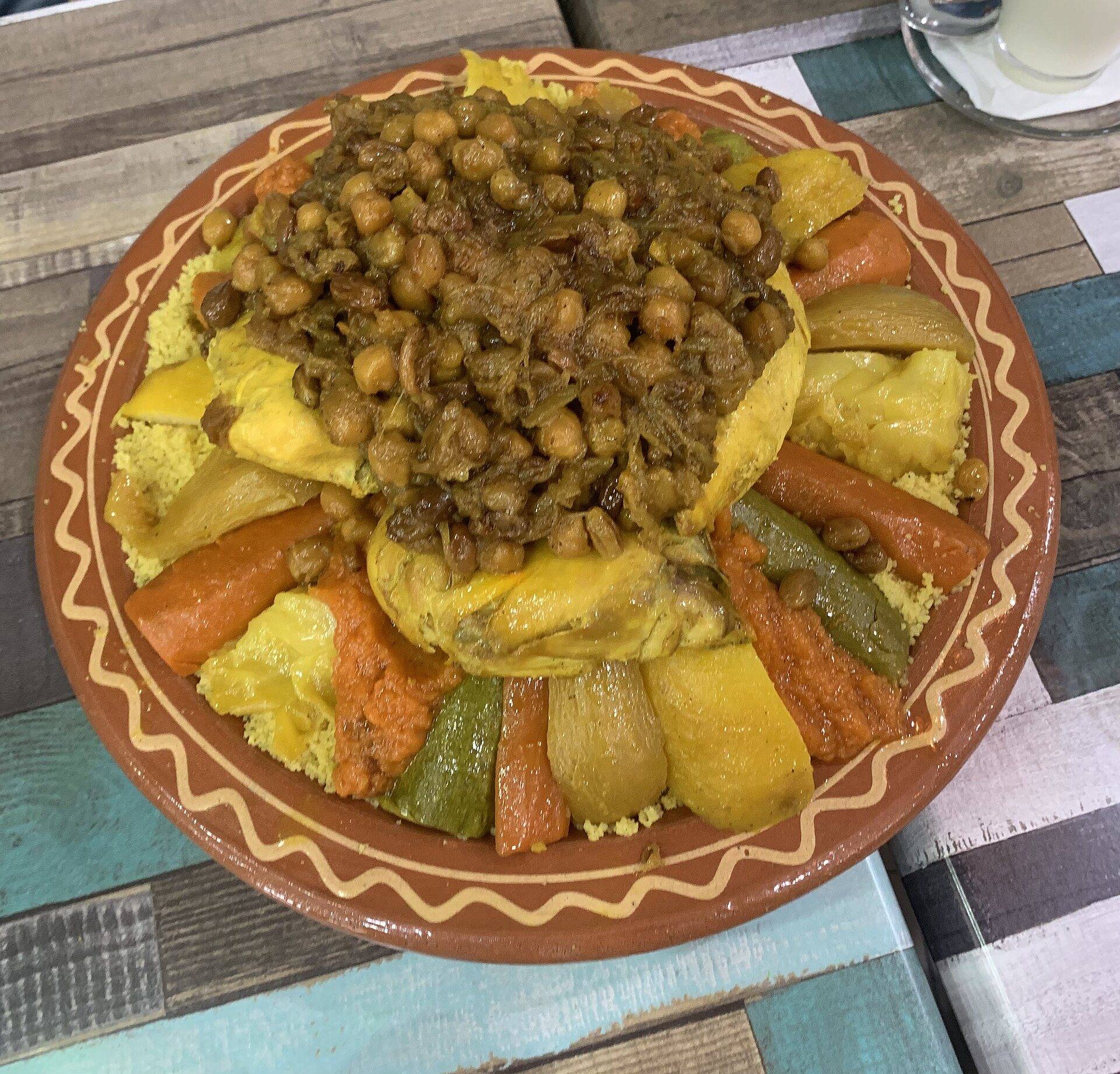
Mound the couscous, arrange the vegetables and finish with broth, sometimes with tfaya, a sweet onion and raisin topping.
On the menu
Menus depend on the season, the host and your preferences. These are dishes often taught in this experience.
The classic Friday couscous, generous and colourful.
Topped with caramelised onions, raisins and cinnamon.
A sweet couscous or vermicelli dish dusted with cinnamon and sugar.
Rural and Amazigh variations, depending on the region and host.
Cultural context
In 2020, the knowledge, know-how and practices related to the production and consumption of couscous were inscribed on UNESCO’s Representative List of the Intangible Cultural Heritage of Humanity, following a joint nomination by Algeria, Mauritania, Morocco and Tunisia.
In Morocco, couscous is linked to gathering: Friday lunch after midday prayers, family celebrations, and large shared platters eaten together. Learning to make it properly is a way into that sense of hospitality.
How long it takes
Typically 3 to 4 hours
Indicative only. Couscous is steamed in stages, so this workshop is best when you are not in a rush.
Who it is for
Where
Availability depends on the season, the day of the week and our local partners in each city. Tell us your dates and we will confirm what is possible.
Good to know
Some hosts teach hand-rolling from semolina, which takes time and practice. Others focus on the traditional steaming method using ready-made couscous. Tell us which you prefer and we will look for a suitable host.
Friday is the main day of congregational prayer, and many Moroccan families gather afterwards for a large shared couscous lunch.
Yes. Seven-vegetable couscous is easily made without meat, using a vegetable and chickpea broth.
Plan your experience
Tell us where and when you would like to cook. We will contact suitable local partners, check availability and send you a personalised offer with the final price.
Request a personalized experience
Share a few details and we will prepare your message to our team. We will contact suitable local partners, check availability and send you a personalised offer. It is free and there is no obligation.
Nothing opened? Write to us at [email protected].
You may also enjoy
3 to 4 hours
Master Morocco’s signature slow-cooked dish: layering meat or vegetables, spices and aromatics in a clay tagine and letting time do the rest.
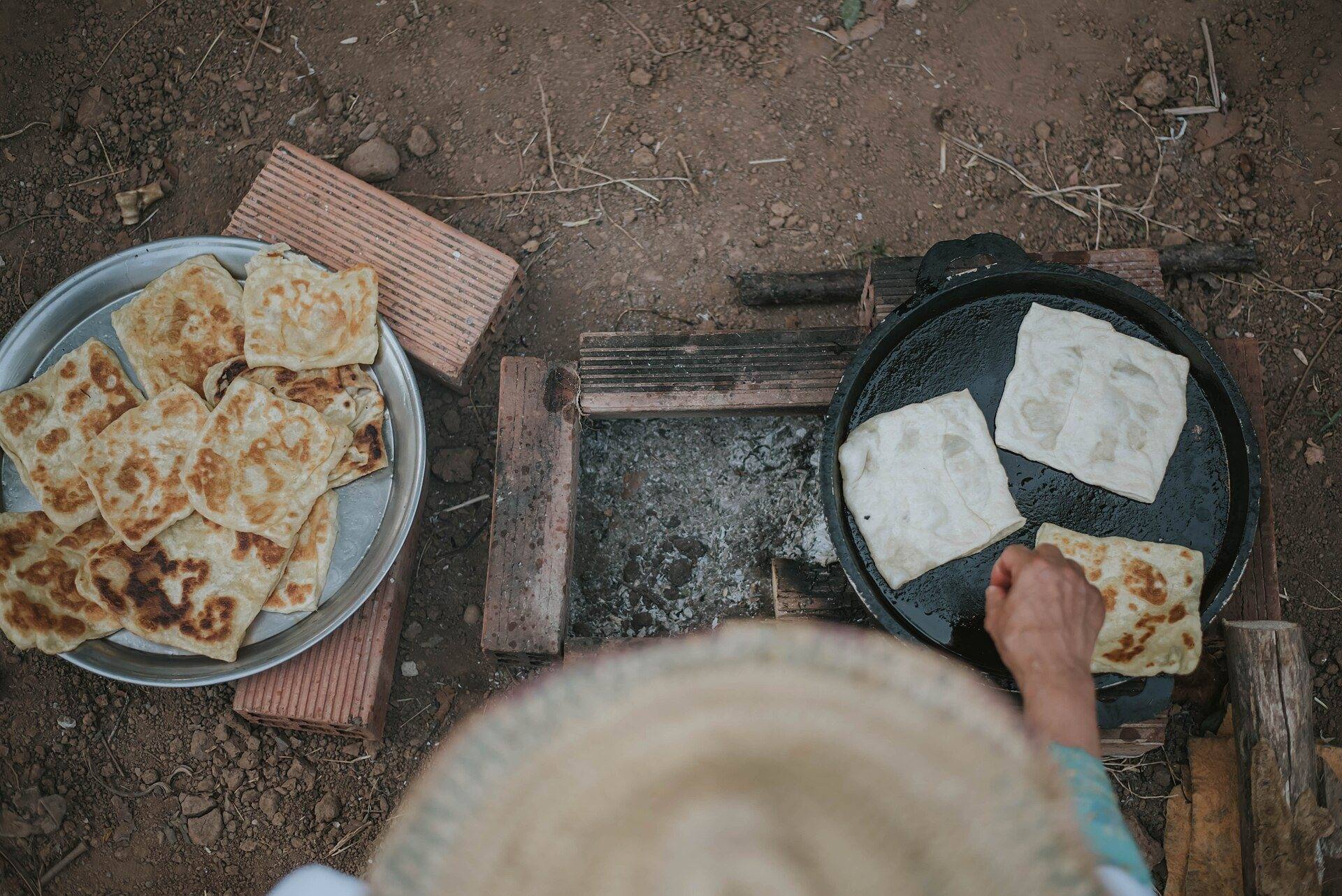
2 to 3 hours
A relaxed, hands-on cooking experience for parents and children, with simple dishes, bread to shape and sweets to decorate.
3 to 4 hours
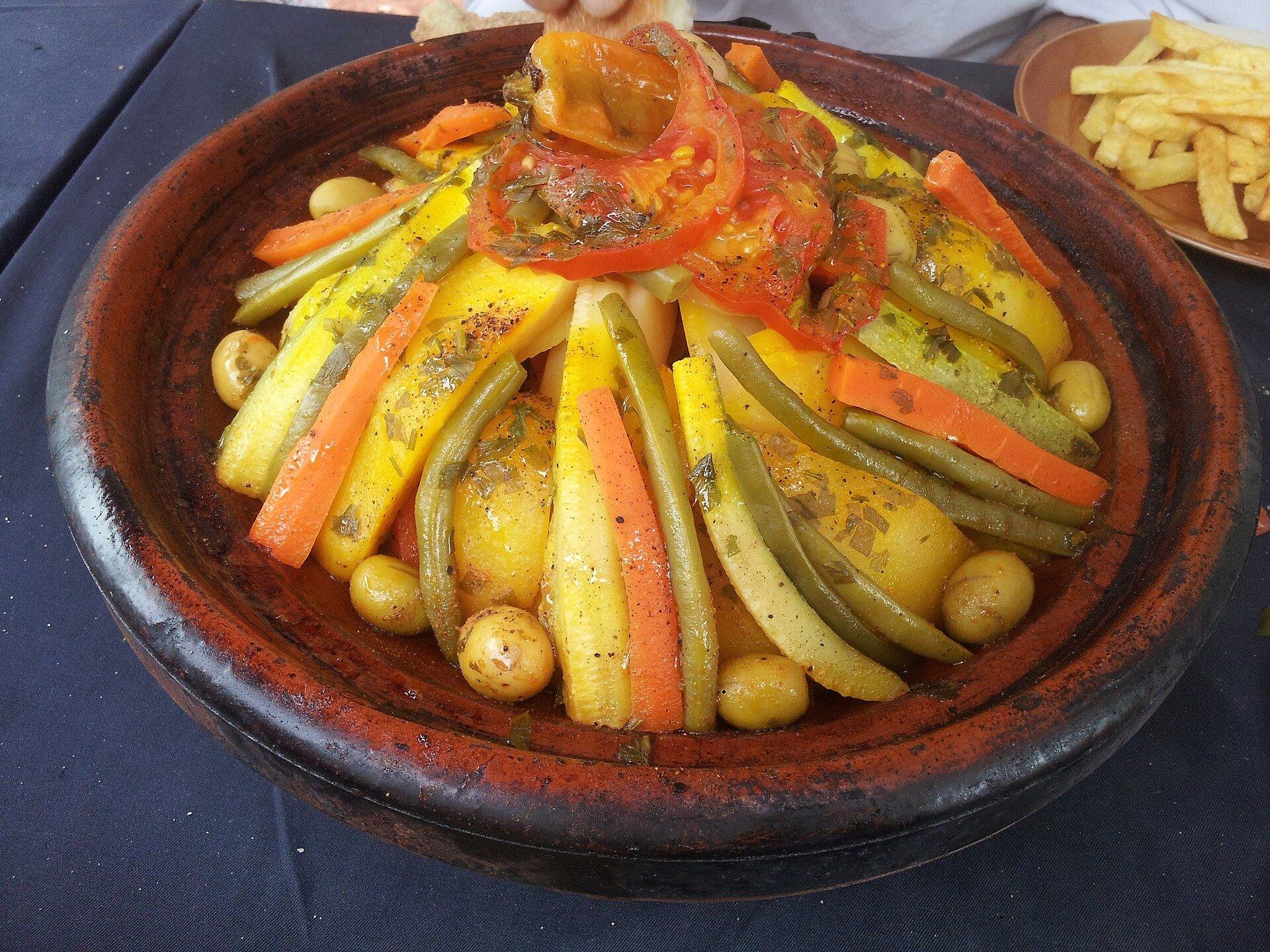
Discover the rich vegetarian side of Moroccan cooking: vegetable tagines, cooked salads, lentils, chickpeas and herb-filled dishes.