Destinations
Discover Essaouira's Seafood Culture
Fishing boats, harbour grills, fish tagines with chermoula and the argan oil of the surrounding countryside: a guide to the food of Essaouira.
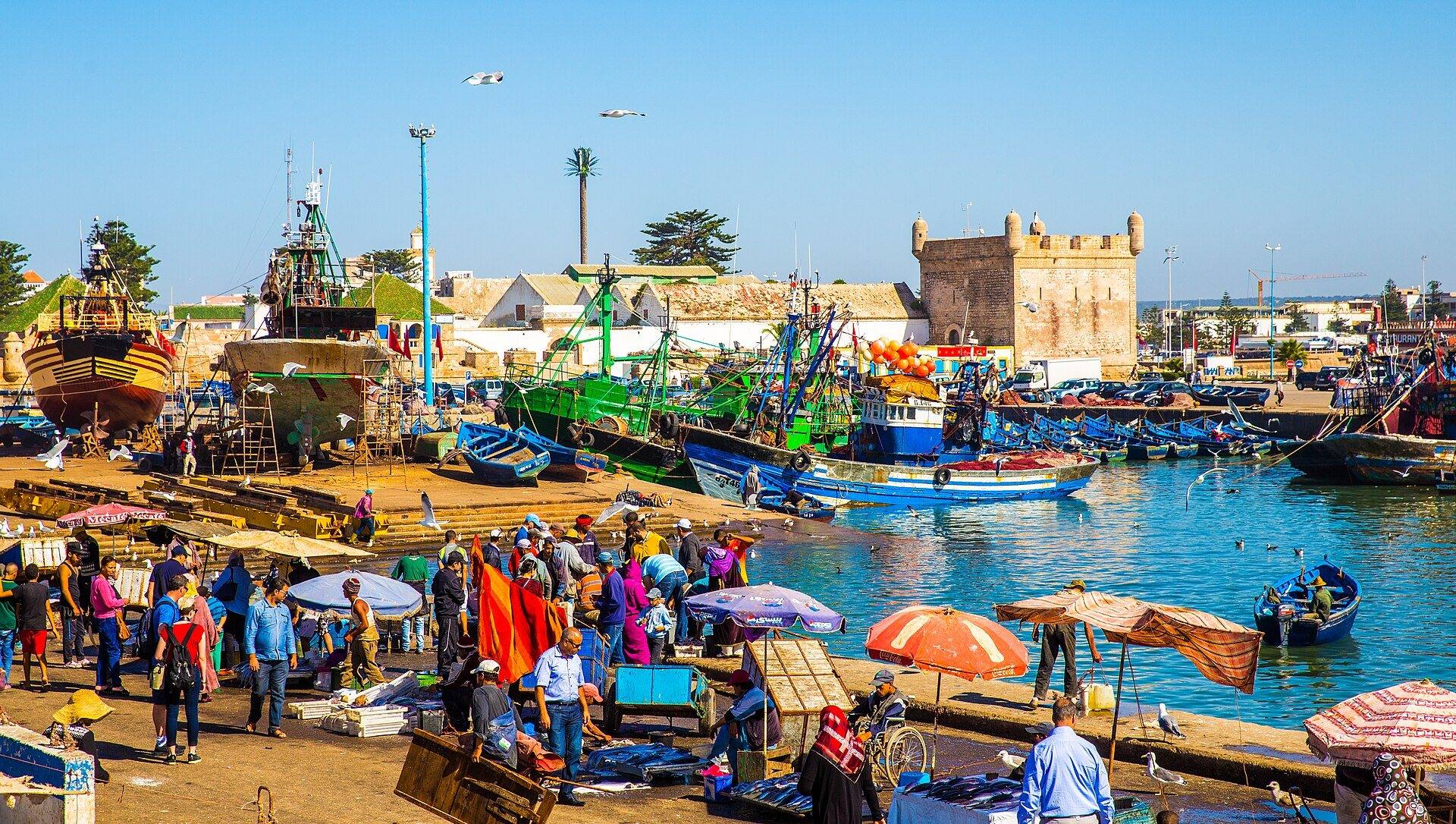
Essaouira is a world away from the bustle of Marrakech. This fortified port on the Atlantic coast is breezy, relaxed and shaped by the sea. Its harbour is full of blue wooden fishing boats, gulls circle overhead, and the smell of grilled fish drifts across the port every lunchtime.
For anyone who loves seafood, it is one of the best places in Morocco to eat and to cook.
A town built for trade
Essaouira’s current form dates from the 18th century, when Sultan Mohammed ben Abdallah commissioned a new port town, laid out on a grid behind sea walls. Once known as Mogador, it became an important trading port with a large Jewish community and merchants from many countries. Its medina is now a UNESCO World Heritage Site.
That history of trade and mixed communities is still felt in the town’s character, and in some of its recipes.
The port
The fishing port is the heart of Essaouira’s food life. Each morning boats return with sardines, sea bream, sole, squid, shrimp, crabs and other catches, which are sold at auction and at stalls by the harbour.
Near the entrance to the port, simple grill stalls display the day’s catch. You choose your fish, agree the price and weight, and it is grilled for you with salt, cumin and lemon, served with bread and a tomato salad.
Tips:
- Agree the price before cooking, including bread and salad.
- Go at lunchtime, when the catch is fresh and the stalls are busiest.
- Sardines are cheap, delicious and a local favourite.
Fish tagine with chermoula
The signature home-cooked dish of the coast is fish tagine. Fish is marinated in chermoula, a mixture of fresh coriander, parsley, garlic, lemon, olive oil, cumin and paprika, then layered in a tagine with sliced potatoes, tomatoes, peppers and sometimes olives and preserved lemon. It cooks slowly until the fish is tender and the vegetables have absorbed the marinade.
Other coastal favourites include:
- Fried fish and calamari, simply seasoned.
- Sardine kefta, spiced sardine balls cooked in tomato sauce.
- Seafood pastilla, a coastal version of the famous pie, filled with fish, shrimp and vermicelli.
Argan country
The hills around Essaouira are covered with argan trees, which grow naturally almost nowhere else in the world. The trees and their landscape are part of the Arganeraie Biosphere Reserve designated by UNESCO.
Argan oil is produced by cracking the hard nuts and pressing the kernels. Culinary argan oil is made from roasted kernels, giving it a nutty flavour. It is drizzled over salads and couscous, eaten with bread for breakfast, and blended with roasted almonds and honey to make amlou, a rich spread. Women’s cooperatives in the region produce and sell argan oil.
The medina markets
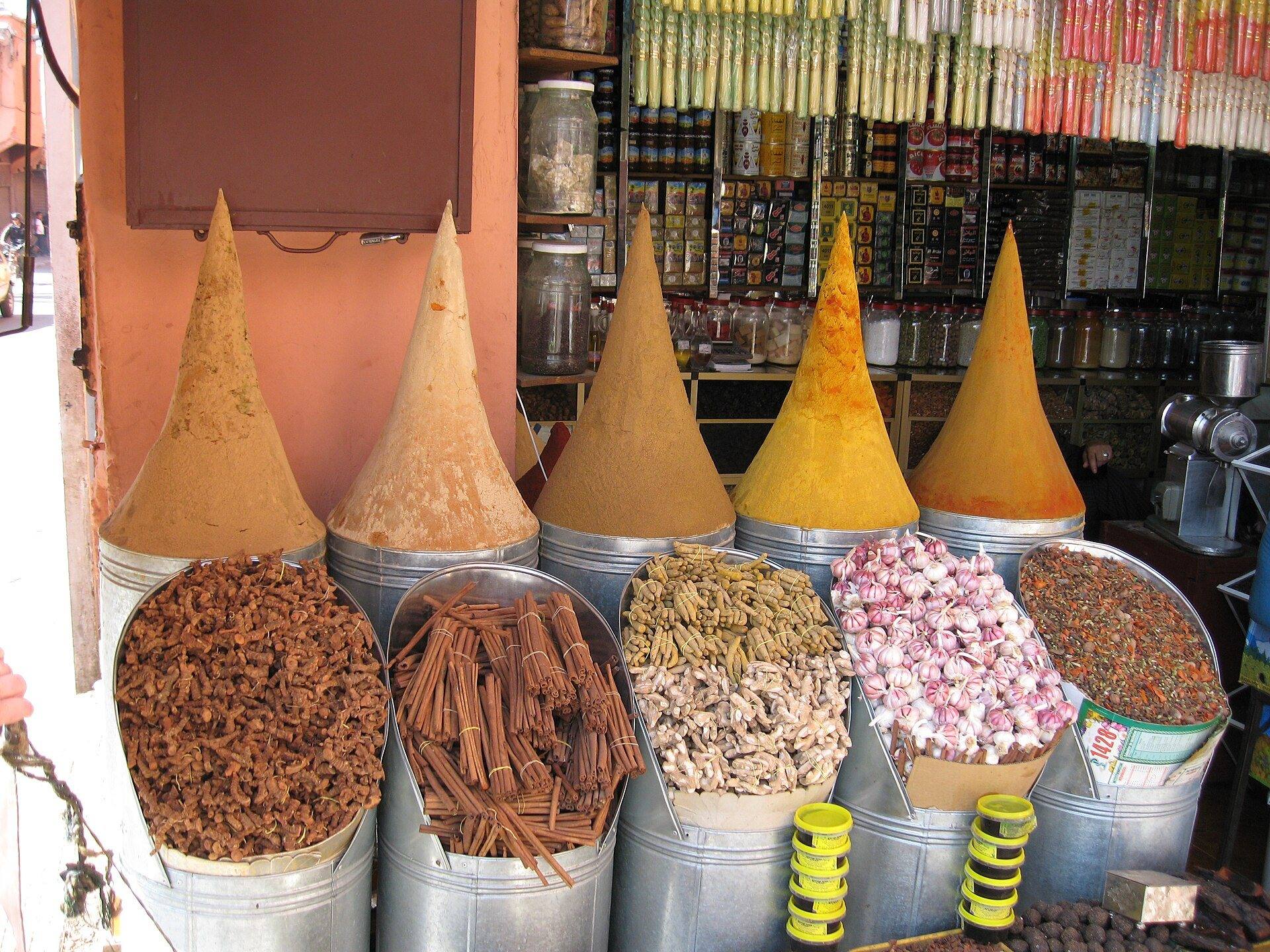
Inside the walls, Essaouira’s markets are compact and easy to explore. Covered market lanes sell fish, spices, olives, vegetables and bread, while the main streets are lined with spice shops and stalls of dried fruit and nuts.
Cooking in Essaouira
Cooking experiences in Essaouira often start at the port or the fish market, where you choose the fish for your tagine, before heading to a medina house or a countryside kitchen to cook. It is a lovely way to understand the rhythm of a fishing town.
If you have a fish or seafood allergy, let us know; there are plenty of vegetable and meat dishes too.
Explore cooking experiences in Essaouira, or combine your trip with Agadir and the Souss region further south.