Destinations
Exploring Marrakech's Food Markets
A guide to the food markets of Marrakech: Jemaa el-Fnaa by night, the spice square, the medina food lanes and covered markets, with tips on what to try and how to shop.
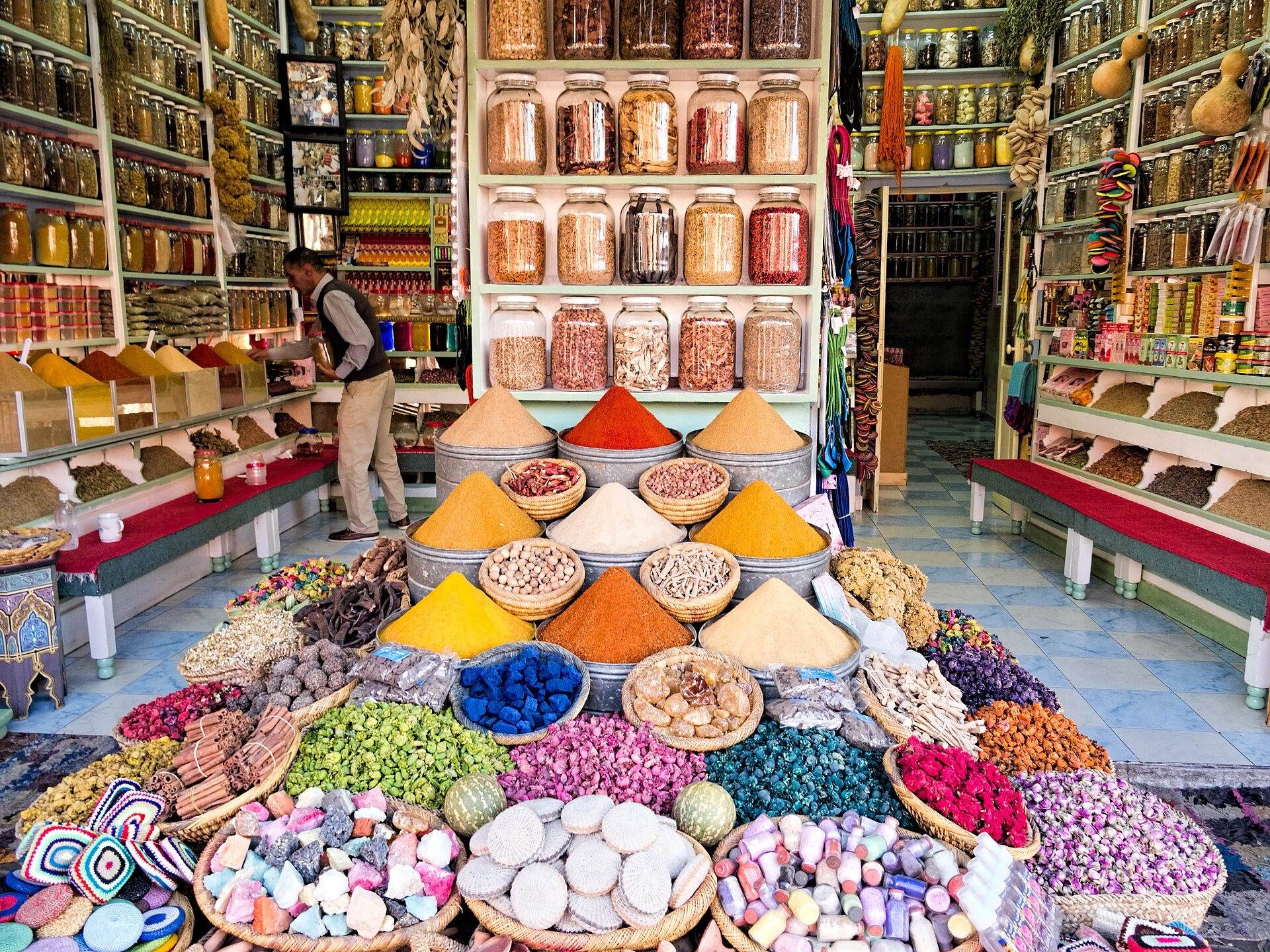
Food is everywhere in Marrakech. Spice cones and dried rosebuds line the lanes of the medina, olive sellers sit behind mountains of green, black and violet olives, and every evening the main square fills with smoke from grills and the clatter of food stalls.
Here is how to make the most of the city’s food markets.
Jemaa el-Fnaa
Jemaa el-Fnaa is the heart of Marrakech. During the day it is a vast open square with orange juice stalls, dried fruit sellers and performers. As evening falls, rows of food stalls are set up and the square becomes an open-air restaurant.
What to try
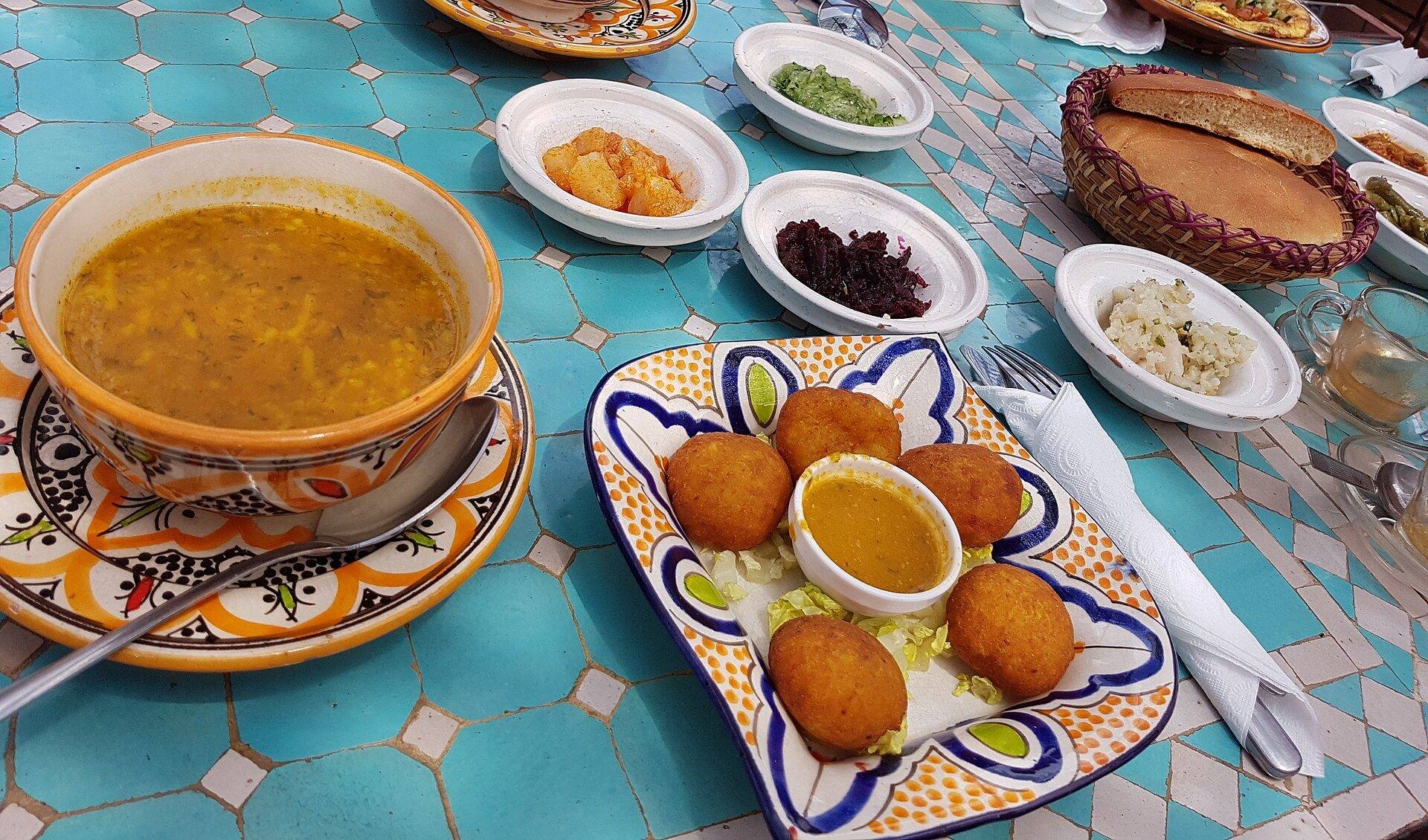
- Harira: the classic tomato, lentil and chickpea soup.
- Grilled meats and kebabs, served with bread and salads.
- Snail soup (babbouche): small snails in a broth spiced with herbs such as thyme, aniseed and liquorice, said to be good for digestion.
- Fresh orange juice from the stalls lining the square.
- Spiced tea with ginger and other spices, often served with a dense cake.
Tips
- Look for busy stalls where locals are eating.
- Check prices before ordering. Most stalls display a menu; confirm what is included, as bread and small dishes may be added to the bill.
- Bring small change.
Mechoui street
Near the square, a small lane is known for mechoui: whole lambs slow-roasted in underground clay ovens. Order by weight and eat it with bread, salt and cumin. It is best at lunchtime.
The spice square: Rahba Kedima
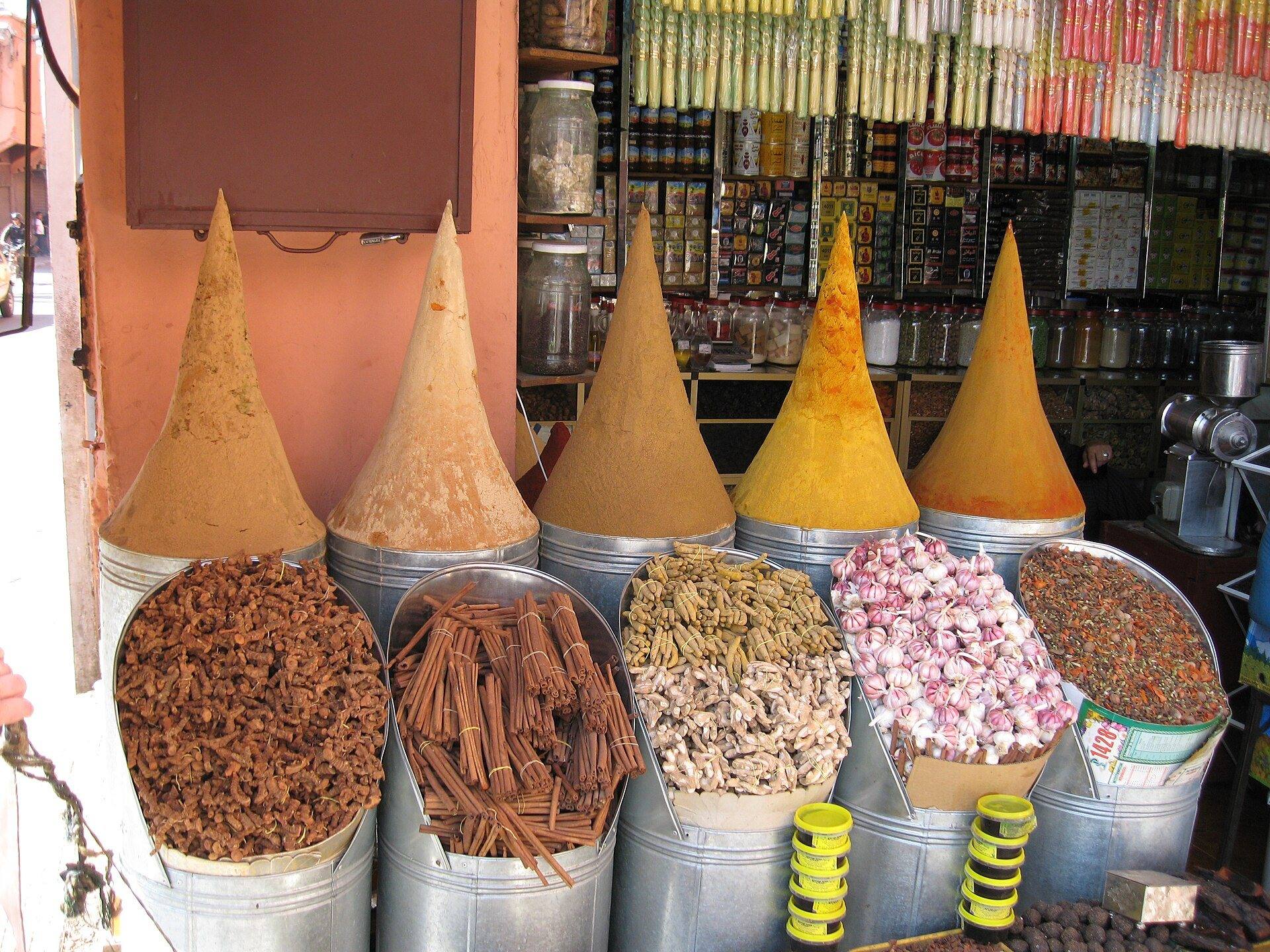
Rahba Kedima, the old spice square, is surrounded by spice and herbalist shops. Here you will see ras el hanout, saffron, cumin and paprika alongside dried flowers, natural cosmetics, argan oil and black soap.
Shopkeepers often explain the uses of each product. It is worth taking time, and remembering that a friendly conversation does not obligate you to buy. Read our guide to Moroccan spices before you go.
Medina food lanes
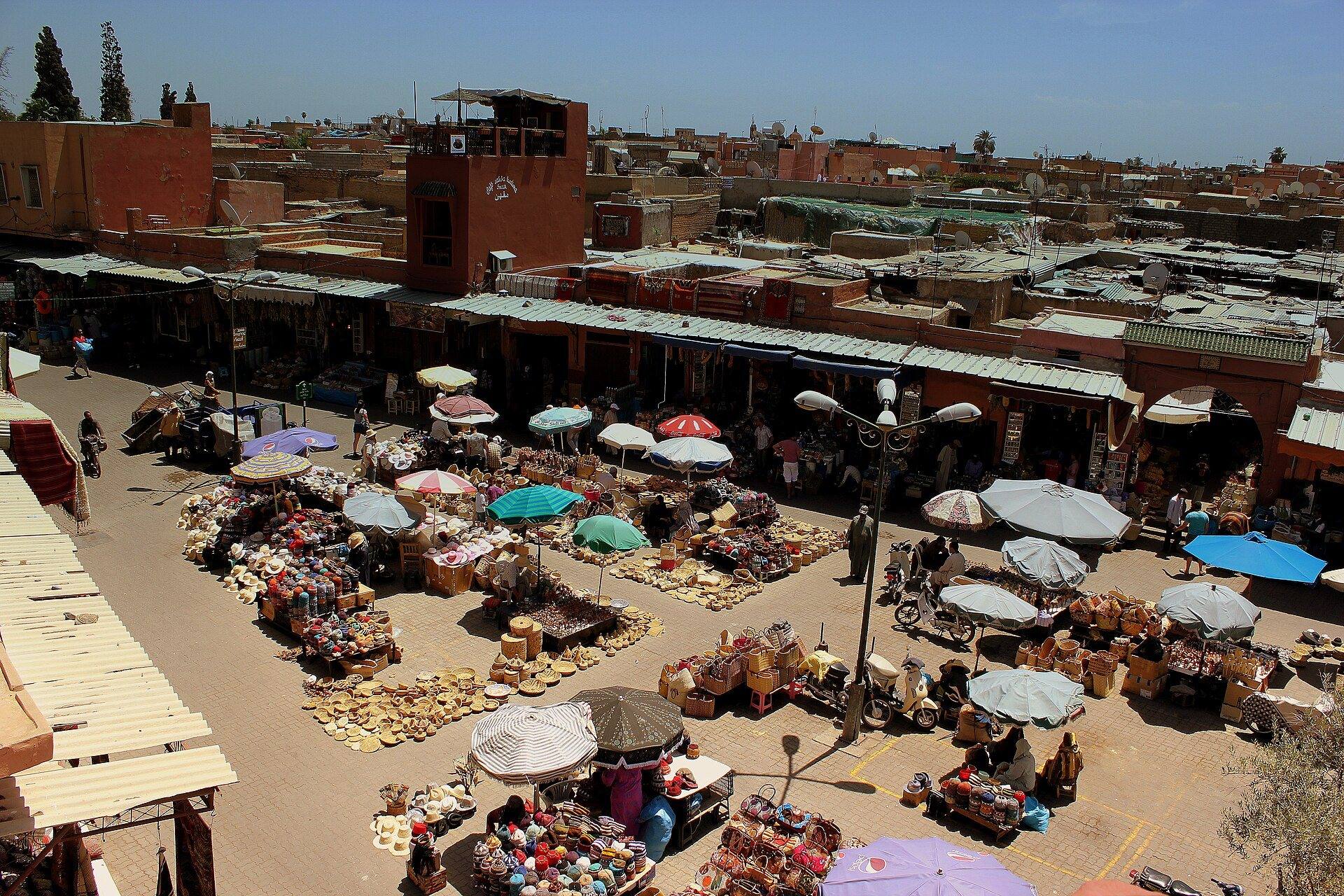
Away from the main souks, the lanes of the medina’s residential areas are where local families shop: small produce stalls, butchers, bread sellers, egg and poultry shops and olive merchants. Visiting with a local host is the best way to understand how Moroccans buy food day to day.
Olives and preserved lemons
Olive stalls are one of the most photogenic sights in the medina. You will find cracked green olives with herbs, purple olives, wrinkled black olives cured in salt, and olives marinated with harissa or preserved lemon. Preserved lemons, packed in salt and their own juice, are an essential ingredient in tagines.
Bread
Look for round khobz, flaky msemen and semolina harcha, stacked on carts and in small bakeries. Some lanes have a neighbourhood oven, where families send their dough to be baked. Read more in our guide to traditional Moroccan bread.
Covered markets outside the medina
The newer parts of Marrakech also have municipal markets, with fresh produce, meat, fish and flowers in a calmer setting. They are a good place to see everyday shopping without the bustle of the souks.
How to shop like a local
- Go in the morning for the freshest produce.
- Buy what is in season, as Moroccan cooks do.
- Ask before taking photos of people and stalls.
- Bargaining is normal in the souks for crafts, but food prices are often fixed or close to it.
- Carry a bag: many stalls give small plastic bags or none at all.
Visit the markets with a local cook
A walk through the markets is even better with someone who knows them. On a market visit and cooking class, your host helps you choose ingredients, explains what you are seeing and then cooks with you. Discover more cooking experiences in Marrakech.