Dishes
Traditional Moroccan Bread: Khobz
Everything about khobz, the round bread on every Moroccan table: its place in daily life, the neighbourhood oven, other Moroccan breads and a simple recipe to bake at home.
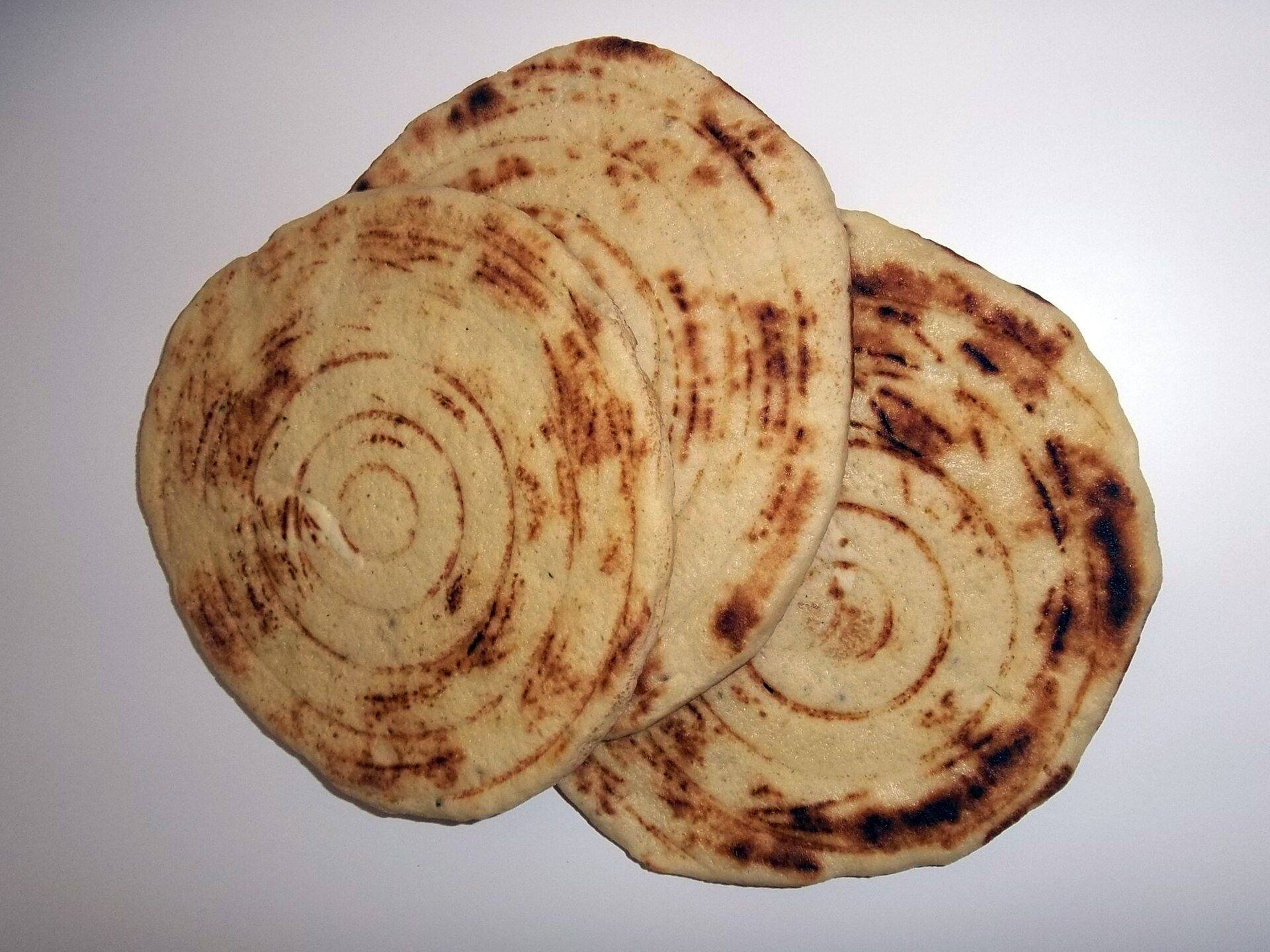
In Morocco, bread is not a side dish. It is the spoon, the fork and the plate. It is torn and used to scoop up tagines, salads and sauces, and it appears at every meal of the day. The most common bread is khobz, a round, slightly flattened loaf with a soft crumb and a thin crust.
Bread and respect
Bread is treated with great respect in Morocco. It is never wasted: leftover bread is used in other dishes or given away, and a piece found on the ground is often picked up and placed somewhere it will not be stepped on. Many people say “bismillah” before cutting or eating it.
What is khobz made of?
Khobz is simple: flour, water, yeast and salt. Many families use a mixture of white flour, wholewheat flour and fine semolina, which gives the bread a slightly golden colour and a more rustic texture. Some add a little sugar, aniseed, nigella seeds or sesame.
The dough is shaped into flat rounds, left to rise, pricked and baked until golden.
The neighbourhood oven
In the old medinas of cities such as Fes and Marrakech, many families still do not bake bread at home. Instead, they prepare the dough in the morning and send it to the ferran, the communal wood-fired oven. The baker, who knows every family’s loaves, bakes them for a small fee and the bread is collected warm a little later.
The ferran is part of neighbourhood life, and some cooking experiences include a short visit to one.
Other Moroccan breads
Khobz is only the beginning:
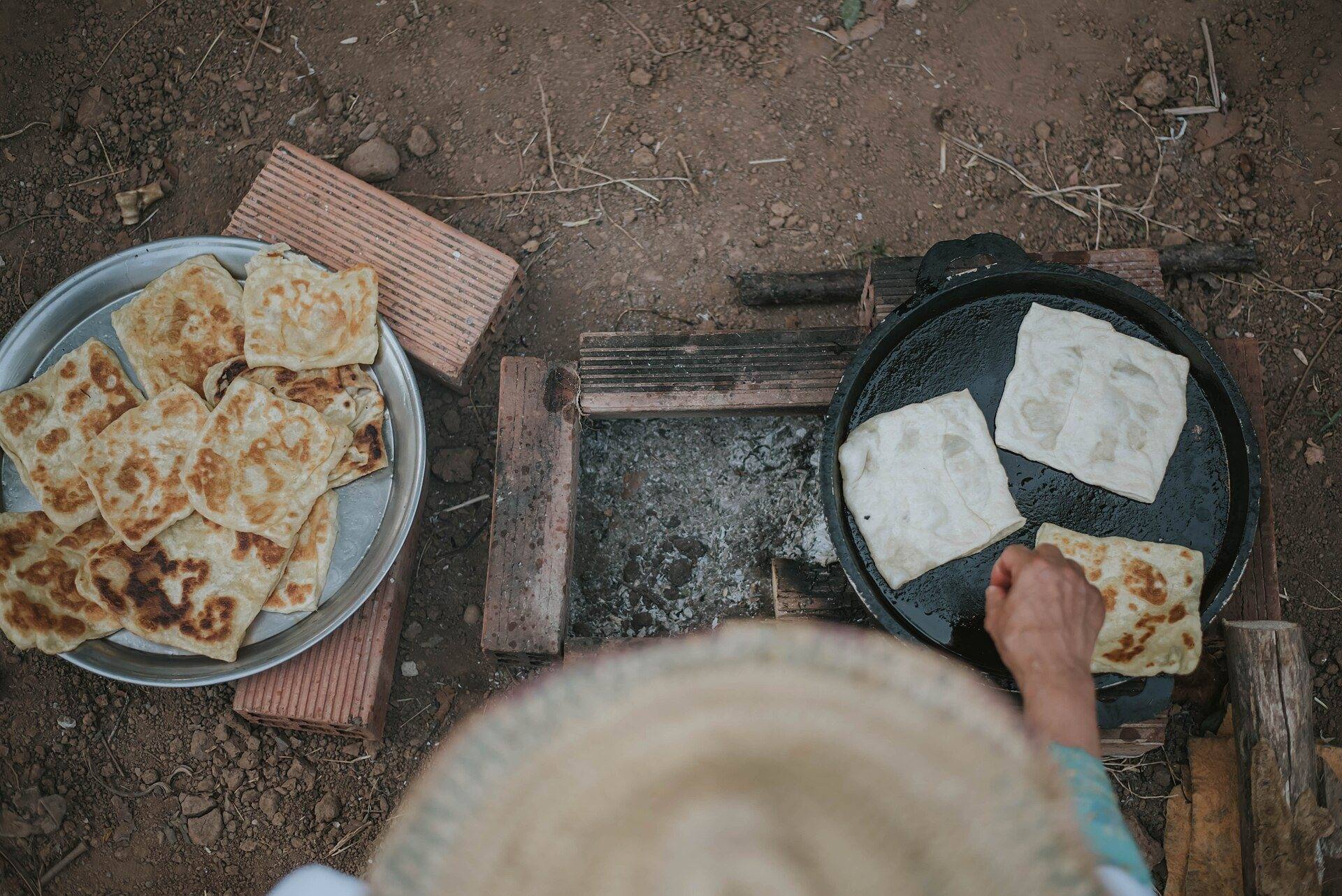
- Msemen: square, flaky flatbreads made by stretching and folding dough with butter and semolina, then cooking it on a griddle. A breakfast favourite.
- Harcha: a buttery semolina griddle bread with a crumbly texture, often eaten with jam or cheese.
- Baghrir: “thousand-hole” semolina pancakes, cooked on one side only and soaked with butter and honey.
- Batbout: small, soft pitta-like breads cooked on a griddle, perfect for stuffing.
- Medfouna: stuffed bread from the Tafilalet region around Merzouga, filled with spiced meat, onions and eggs.
- Tafarnout: bread baked against hot stones in a traditional clay oven, found in rural Amazigh areas.
Recipe: simple Moroccan khobz
Makes 2 medium loaves.
Ingredients
- 350 g strong white bread flour
- 150 g fine semolina (or wholewheat flour)
- 1 teaspoon salt
- 1 teaspoon sugar
- 7 g fast-action dried yeast
- About 320 ml lukewarm water
- 1 tablespoon olive oil
- Extra semolina for dusting
Method
- Mix. Combine the flour, semolina, salt, sugar and yeast in a large bowl. Add the oil and most of the water, and mix to a soft dough, adding more water if needed.
- Knead. Knead for about 10 minutes, until smooth and elastic. Moroccan cooks often knead with the heel of the hand, pushing the dough away and folding it back.
- Shape. Divide into two pieces and shape each into a ball. Flatten each ball into a round about 2 cm thick on a tray dusted with semolina.
- Rise. Cover with a clean cloth and leave in a warm place for 45 minutes to an hour, until puffy.
- Prick and bake. Heat the oven to 220°C. Prick each loaf several times with a fork and bake for 18 to 22 minutes, until golden and hollow-sounding when tapped underneath.
- Cool and serve. Wrap in a cloth to keep the crust soft, the way khobz is kept in Moroccan homes.
Eating khobz the Moroccan way
Tear a piece of bread with your right hand, use it to pinch a small amount of food from the shared dish and eat it in one bite. At breakfast, khobz is eaten with olive oil, honey, butter, jam, cheese, olives or amlou.
Bake bread in Morocco
Bread-making is one of the most enjoyable experiences for families and anyone who likes working with their hands. Explore our Moroccan bread-making experience, or combine it with a full cooking class.