Dishes
Moroccan Pastries You Need to Try
Gazelle horns, chebakia, ghriba, briouats, sellou and more: a guide to the most loved Moroccan pastries and sweets, when they are eaten and where to find them.
Moroccan sweets are made to be shared. They appear on trays with mint tea for guests, in boxes at weddings, and in huge quantities during Ramadan and Eid. Many are based on almonds, sesame, honey and orange blossom water, reflecting the Andalusian and Arab influences on Moroccan cuisine.
Here are the pastries worth seeking out.
Kaab el ghazal (gazelle horns)
Perhaps the most elegant Moroccan pastry: a crescent of very thin dough wrapped around a filling of almond paste flavoured with orange blossom water and a little cinnamon or mastic. They are delicate, not too sweet and a staple of celebrations. The name is often said to come from their curved shape.
Chebakia
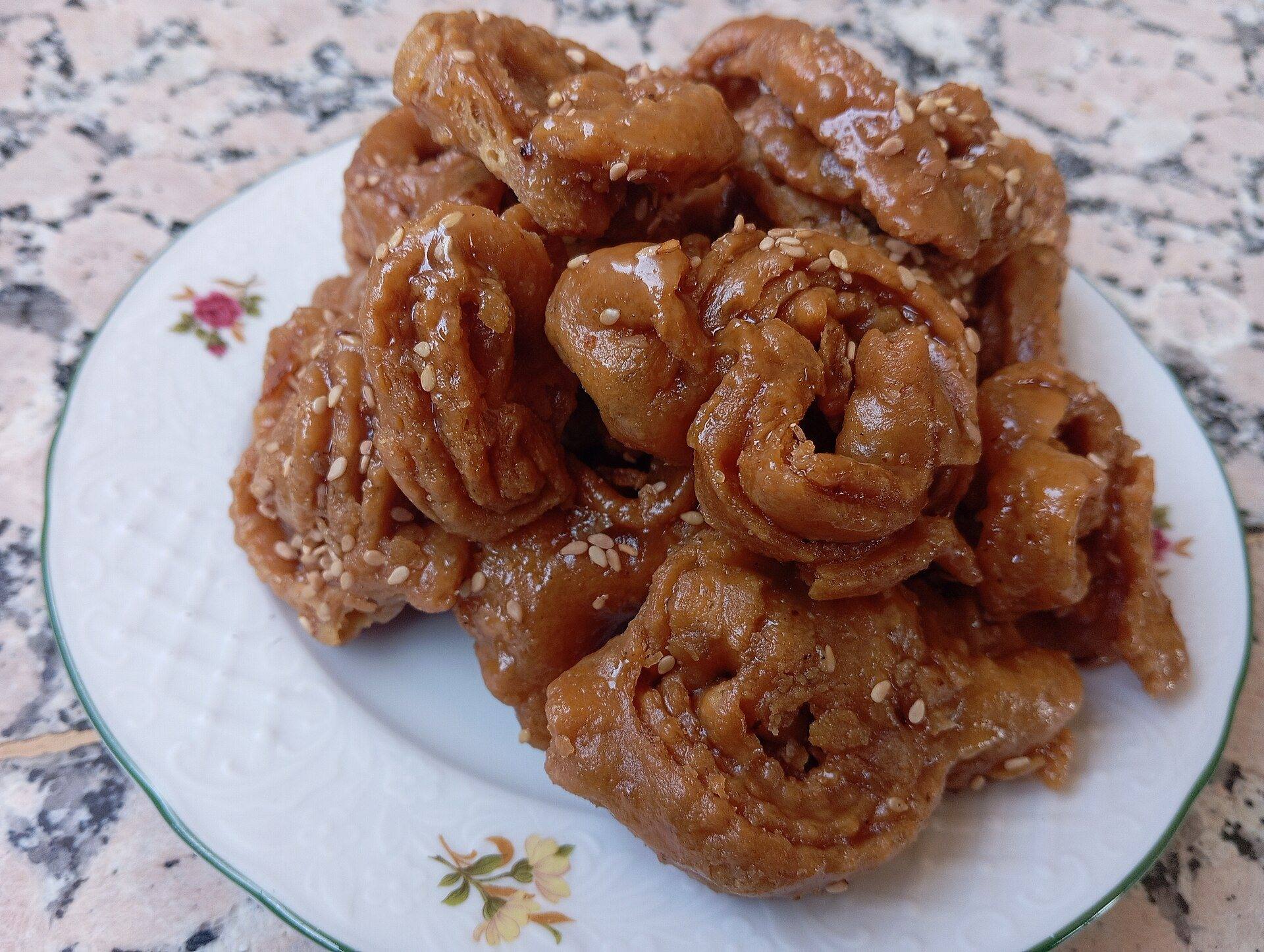
Chebakia are flower-shaped cookies made from a dough flavoured with sesame, anise, cinnamon and saffron. They are folded into a rosette, fried and soaked in honey, then sprinkled with sesame seeds. Sticky, crunchy and intensely sweet, they are closely associated with Ramadan, when they are served with harira to break the fast.
Ghriba
Ghriba are crackled cookies with a soft centre, rolled in powdered sugar before baking so the surface cracks in the oven. There are many versions: almond, coconut, semolina, sesame and walnut. They are easy to make, which makes them a favourite in family cooking experiences.
Briouats
Briouats are small triangles or cigars of thin warqa pastry with a sweet or savoury filling. Sweet versions are filled with almond paste, fried and dipped in honey. Savoury ones may contain spiced meat, chicken, cheese or vegetables, and are served as starters.
Fekkas
Fekkas are twice-baked biscuits, rather like biscotti, flavoured with almonds, raisins, sesame or aniseed. They keep well and are perfect with tea or coffee.
Sellou (sfouf)
Sellou is not a pastry but a rich, crumbly mixture of toasted flour, ground almonds, sesame, butter, honey and spices such as anise and cinnamon. It is very nourishing and prepared in large quantities during Ramadan and after childbirth.
M’hancha
M’hancha, “the snake”, is a long coil of almond-filled pastry, rolled into a spiral and baked. It is often made for special occasions and sliced to share.
Krachel
Krachel are soft, sweet buns flavoured with aniseed, sesame and orange blossom water, often eaten at breakfast or with tea.
Baghrir and msemen
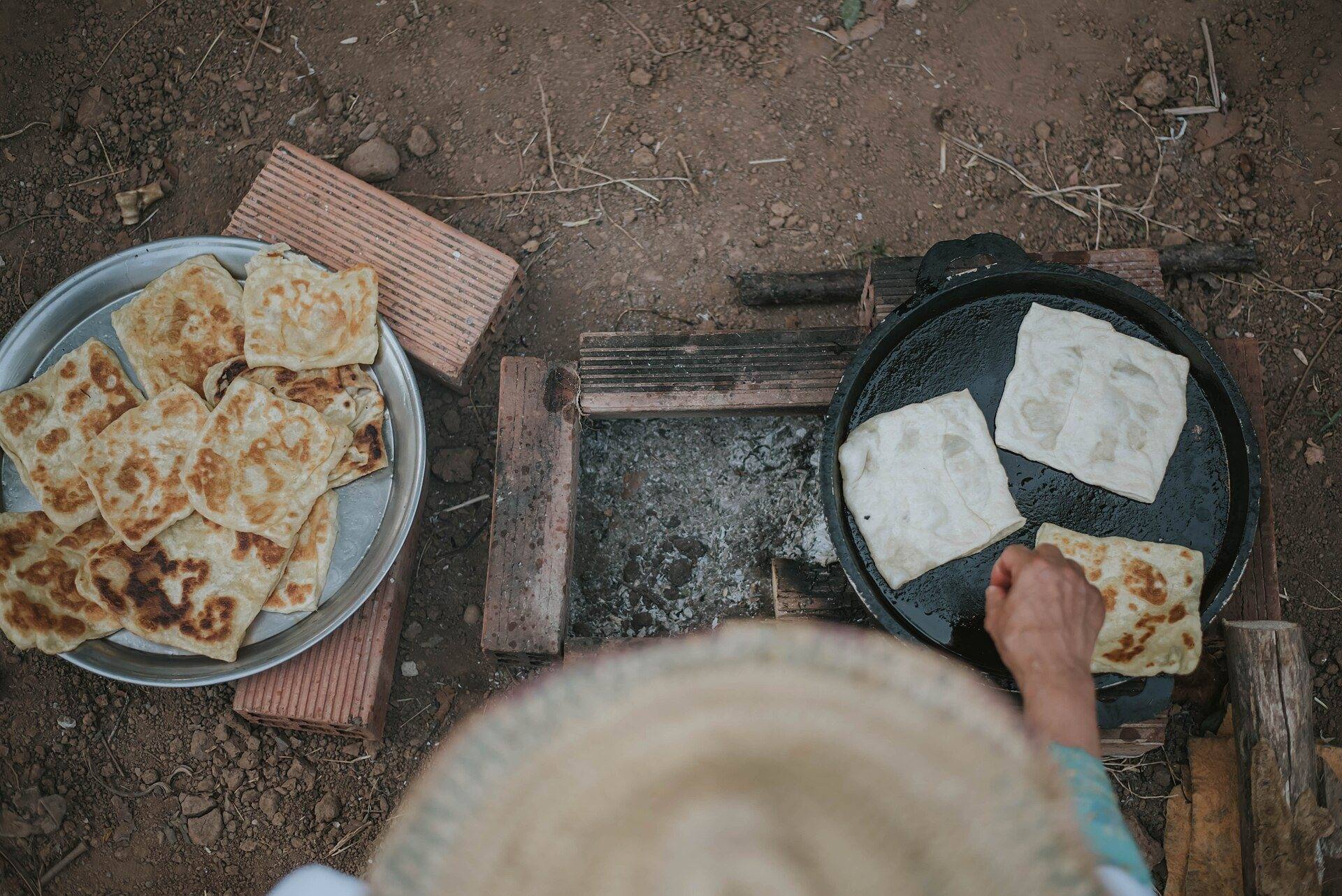
Not pastries in the strict sense, but no list of Moroccan sweet treats is complete without baghrir (semolina pancakes with “a thousand holes”) and msemen (flaky square flatbreads), both soaked with melted butter and honey.
When are Moroccan pastries eaten?
- With mint tea, when guests visit.
- During Ramadan, especially chebakia and sellou.
- At Eid al-Fitr, when families prepare trays of biscuits and almond sweets.
- At weddings, births and engagements, often in impressive quantities.
Where to find them
Every city has neighbourhood bakeries and pastry shops. The traditions of Fes, Rabat and Tetouan are especially renowned. In the medinas of Marrakech and Fes, look for stalls piled high with honey-soaked sweets and shops selling almond pastries by weight.
Make them yourself
Moroccan pastries are fun to make with an expert, because so much depends on technique: rolling the dough thin enough, shaping a perfect crescent, judging the honey. In a Moroccan pastry class, you prepare a selection with a local pastry maker and enjoy them with fresh mint tea.
A note for allergy sufferers: most traditional pastries are based on almonds, peanuts, sesame or other nuts and seeds. Please tell us about any allergy when you inquire.